|
Kentucky Geode Trip
September 4-5, 2004 By Mike Streeter mcstreeter@charter.net
|
|
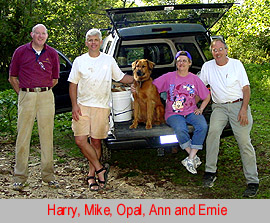
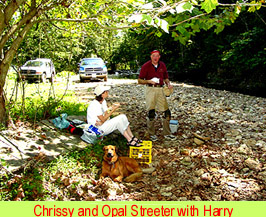
For the second year in a row, Chrisy, Opal and I joined up with Harry Polly and
his crew from the Catawba Valley Gem and Mineral Club for their traditional labor day field trip
to the Green River/Halls Gap area of east-central Kentucky. They have been going to this area
to collect geodes and fossils for over 15 years. Over these many years, Harry and his partner, Ernie
Koebberling, have established a good relationship with several local landowners who allow access to
their properties for collecting.
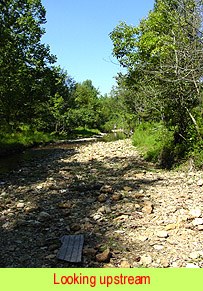
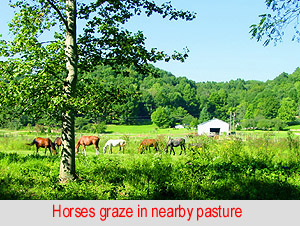
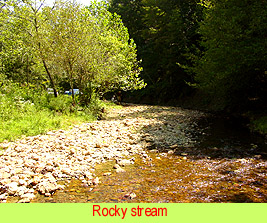 This area of Kentucky is best known for its horses that are raised in lush green pastures and rolling hills. Running through the countryside are many streams that erode the limestone country rock to expose countless geodes of varying sizes and contents.
Randy Jones and his son, Cody, were able to make the trip as were Ernie and Ann
Koeberling,
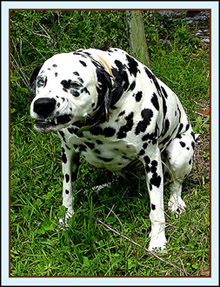
While at one of the sites, a Dalmation dog approached me with her teeth bared in what appeared to be a threatening manner. But, I noticed that she was wagging her backside and she was not growling. As it turns out, the black spotted lady was so happy to have company that she grinned, baring her teeth like a Chesire cat. Opal didn't quite know what to make of a grinning dog at first, but the two became buds before the day was over.
There are two good ways to crack geodes. The first or brute force method
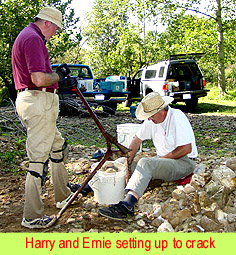
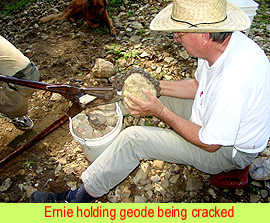
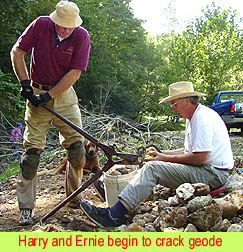
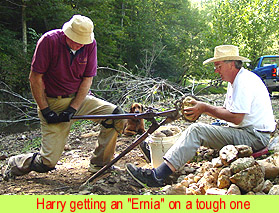
is to use a The other way to crack geodes is to use a plumber's wheeler-type soil pipe cutter. I have seen Harry and Ernie spend hours splitting geodes with their pipe cutter. This method works pretty well with geodes up to about 6-inches. The pipe cutter will not split larger solid nodules but you don't find this out until you have applied a great deal of pressure on the cutter's arms. In one case that I witnessed, a certain individual, who shall remain nameless, rode the upper arm like it was a bronco. The next series of pictures show Harry and Ernie using a soil pipe cutter to try to split what turned out to be a solid nodule . . . the nodule won . . . at least until I whacked it with my 6-pound sledge (the brute force method in action).
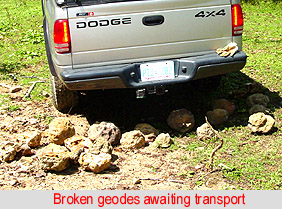
Chrissy and I knew that we were finished collecting when we had filled every bucket and plastic tub that we had in the back of the Dodge. After all, we had to save some space for Opal - she hates being strapped to the top of the truck.
Chrissy and I started looking foward to the next Kentucky trip just as soon as we drove away from the last site. But our wanting to return was as much about our wonderful group of rockhounding companions than for the plentiful geodes.
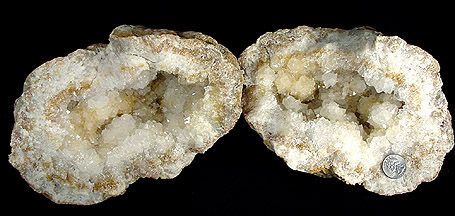
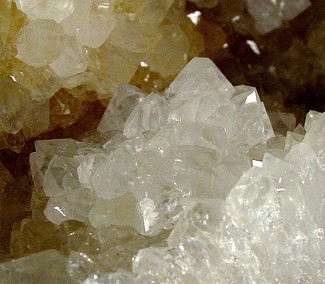
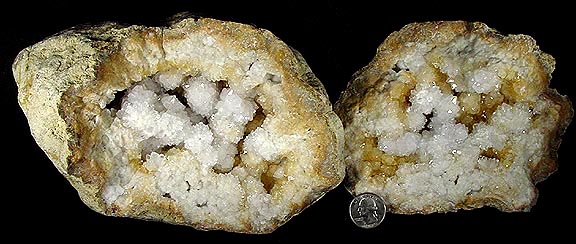
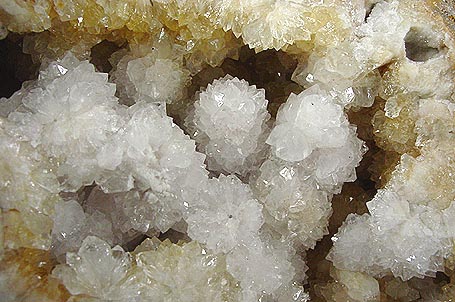
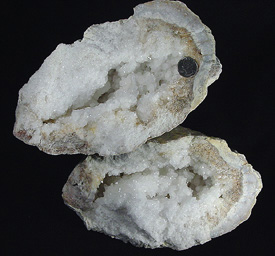
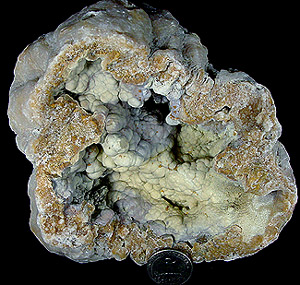
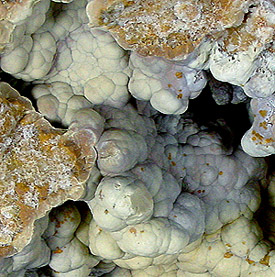
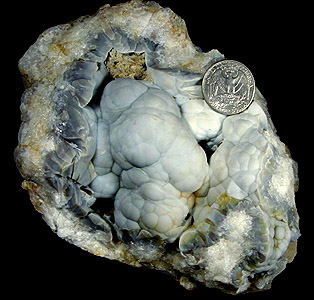
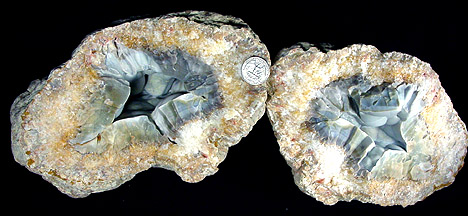
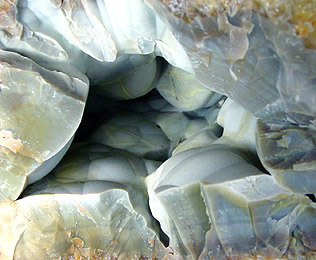
Thanks to tropical storm Francis, all of our geodes and tools still remain in the back of our truck. Therefore, I took the following picures of some of last year's geodes collected from the very same locations we visited this year to illustrate the types of neat stuff to be had by banging around the right Kentucky creeks. Quartz Geodes
Chalcedony Geodes
|
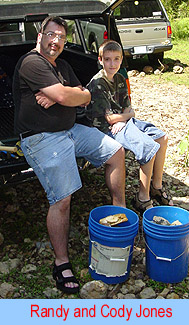
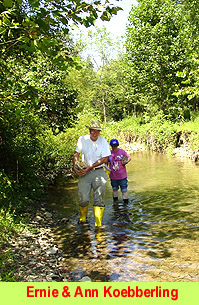 and Charles and Lori Carter. Janice Polly was nice enough to drive down with Harry but she opted for
more "civilized" activities in town while the rest of us spent the day collecting.
and Charles and Lori Carter. Janice Polly was nice enough to drive down with Harry but she opted for
more "civilized" activities in town while the rest of us spent the day collecting.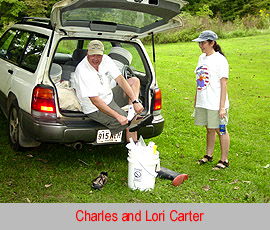
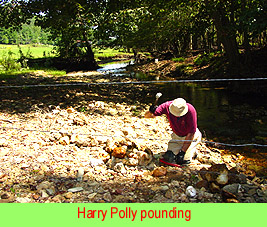 crack or small sledge hammer and chisel to split the geode. The degree of pressure applied to the
geode is directly proportional to its size and the thickness of its outer layer. Most of the geodes are not
hollow (nodules), while some contain only small interior chambers; these are the ones that take the
most effort to break. After busting a series of very hard nodules, it can be frustrating to
bust a very hollow geode into a pile of worthless pieces by whacking it way too hard. Scoring the outer circumference
of a geode with a series of blows with a hammer and chisel can help ensure that it will crack evenly
upon the final blow with a well-placed chisel. Athough this method does work, it is hardly practical when
crack or small sledge hammer and chisel to split the geode. The degree of pressure applied to the
geode is directly proportional to its size and the thickness of its outer layer. Most of the geodes are not
hollow (nodules), while some contain only small interior chambers; these are the ones that take the
most effort to break. After busting a series of very hard nodules, it can be frustrating to
bust a very hollow geode into a pile of worthless pieces by whacking it way too hard. Scoring the outer circumference
of a geode with a series of blows with a hammer and chisel can help ensure that it will crack evenly
upon the final blow with a well-placed chisel. Athough this method does work, it is hardly practical when
 you are surrounded by hundreds of geodes - so many geodes, so little time . . .